
The Royal Society Pairing Scheme gives policymakers and research scientists an opportunity to experience each other’s worlds, building bridges between parliamentarians, civil servants and some of the best research scientists in the UK.
Tuesday 17th March marked a standout moment in the annual Royal Society Pairing Scheme week, as academics and policymakers came together for a full afternoon hosted by the Government Science & Engineering (GSE) Profession. Following a morning exploring Parliament, delegates gathered for a vibrant, fast‑paced programme focused on how science shapes policymaking in practice.
The afternoon opened with networking and interactive exhibitor stands, offering participants the chance to learn more about how science advice is embedded across government. From practical examples of how Chief Scientific Adviser teams support cleaner and fairer policy, to demonstrations of the Areas of Research Interest (ARI) database, the session highlighted the many routes through which academics and government can work together.
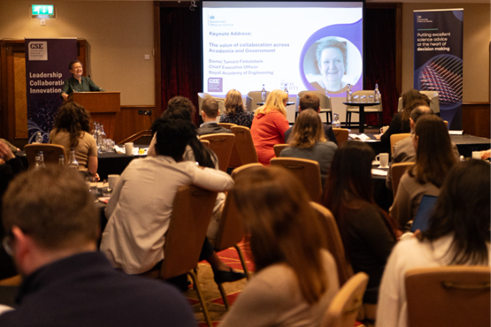
The formal programme began with a warm welcome and scene‑setting from Dr Sophie Boldon (Deputy Director for Science Capability, GO‑Science), followed by an inspiring keynote from Dame Tamara Finkelstein, CEO of the Royal Academy of Engineering, on the vital role engineers and scientists play in addressing today’s complex policy challenges.
“I am glad to see the Royal Society Pairing Scheme going from strength to strength and it really emphasises the value of working together across academia and government”.
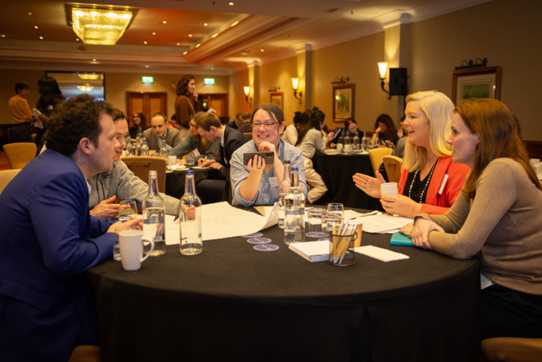
A rapid “turbo talk” on academic engagement set the tone for an interactive ‘Policy Maker for a Week’ activity, giving participants a hands‑on insight into navigating real‑world policy trade‑offs during a fictional scenario involving high pressure situations.
Participants acted as policy advisers preparing a short submission for a minister on whether and how emerging technologies could help prevent whale strandings by 2035, considering scientific feasibility, alternatives, cross‑government impacts, and media handling. Participants had to advise ministers under time pressure, assessing evidence and account for public risk.
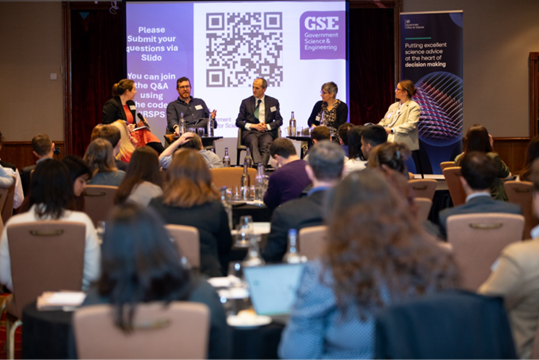
The day closed with a lively panel discussion on using reliable scientific evidence in policymaking, bringing together voices from government and academia to reflect on what works, barriers to success, and where early consultation and collaboration make the greatest difference. Panellists emphasised the value of engaging researchers early, being clear about the policy question and timescales, and communicating evidence and uncertainty in a way that is usable for decision makers.
“I am now more inclined to engage with academia/university sector in my policy work. Now that I know, thanks to this event, how much they want to engage with us.”
~ DEFRA policymaker
The GSE Profession Day showcased the energy, curiosity and shared commitment that sit at the heart of the Pairing Scheme - strengthening understanding, collaboration and building lasting connections between academics and government.
Read more about the 2026 Royal Society Pairings and who was involved at the Royal Society website. If you are interested in applying for the 2027 cohort, applications open in August 2026.







Recent Comments